
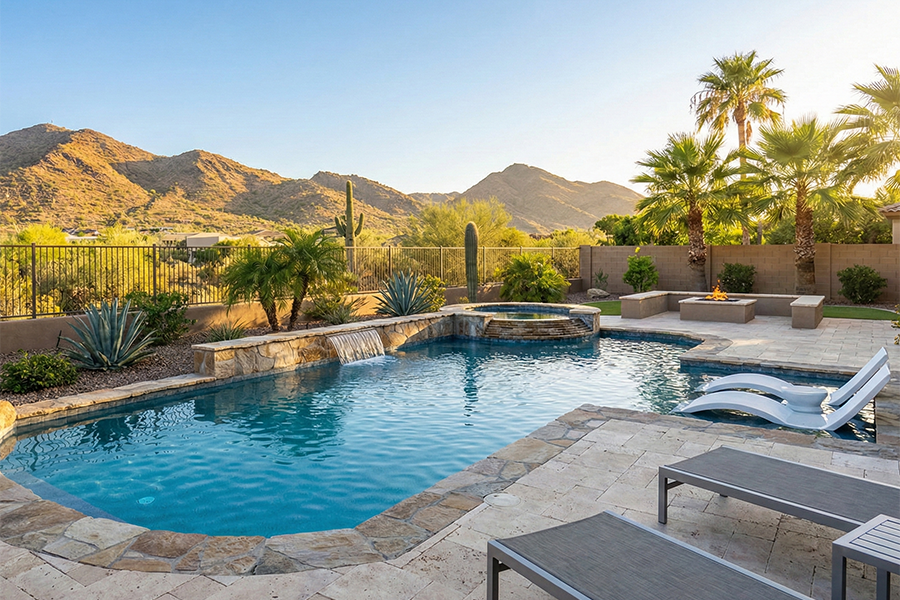
Few home improvements make more sense in the Valley of the Sun than a backyard swimming pool. With temperatures exceeding 100°F for months on end, Phoenix homeowners understand that a pool isn’t a luxury—it’s a lifestyle essential.
If you’re considering pool construction in Phoenix, this guide walks you through everything you need to know, from permits and planning to the structural elements that will keep your pool in top shape for decades.
Why Phoenix Is Ideal for Pool Ownership
Arizona ranks among the top states for residential pools per capita, and Phoenix leads the way. The dry climate means more swim days per year, lower humidity for comfortable outdoor living, and minimal issues with the heavy rainfall that plagues pools in other regions.
That said, the Sonoran Desert presents unique challenges. Extreme heat, expansive clay soils, and caliche (a calcium carbite layer common in Arizona soil) all require specialized construction approaches.
Step 1: Planning and Design
Before breaking ground, you’ll need to address several key considerations.
Lot Assessment
Not every Phoenix backyard is pool-ready. A professional site assessment will evaluate soil composition and drainage patterns, proximity to property lines and utility easements, access for construction equipment, and existing landscaping or hardscape that may need removal.
Pool Type Selection
Phoenix homeowners typically choose between three main pool types. Gunite (concrete) pools offer maximum customization and durability, making them the most popular choice for Arizona’s climate. Fiberglass pools provide faster installation but limited shape options. Vinyl liner pools have lower upfront costs but require liner replacement every 7–10 years.
For the Phoenix heat and soil conditions, gunite pools remain the gold standard due to their structural integrity and longevity.
Design Considerations
Work with your pool designer to incorporate features suited to Arizona living. Shaded areas or integrated pergolas help manage sun exposure. Light-colored finishes reduce surface temperatures. Deep ends of at least 8 feet allow for cooler water at depth. Built-in cleaning systems minimize maintenance in our dusty environment.
Step 2: Permits and Regulations
Maricopa County and Phoenix require permits for all pool construction. The permitting process typically involves submitting engineered construction plans, demonstrating compliance with setback requirements (usually 3–5 feet from property lines), showing barrier and fencing plans that meet safety codes, and providing electrical plans for pumps, lighting, and equipment.
Permit approval generally takes 2–4 weeks. Your contractor should handle this process, but homeowners should verify that all permits are properly posted before construction begins.
HOA Considerations
Many Phoenix communities have homeowners associations with additional requirements. Review your CC&Rs for restrictions on pool size, placement, fencing styles, and equipment screening.
Step 3: The Construction Process
Pool construction in Phoenix follows a well-established sequence that typically spans 8–12 weeks.
Excavation (Week 1–2)
Heavy equipment removes soil to create the pool shell shape. In Phoenix, contractors frequently encounter caliche, which requires specialized equipment to break through. This calcium carbite layer is extremely hard but actually provides an excellent stable base once excavated.
Steel Reinforcement (Week 2–3)
This phase is critical to your pool’s long-term structural integrity. A framework of steel rebar is installed throughout the excavated shell, creating a reinforced cage that will support the concrete.
Quality rebar installation matters enormously in Phoenix due to our expansive soils, which expand and contract with moisture changes. The steel framework must be engineered to withstand these soil movements without cracking. Key factors include proper rebar spacing (typically 12 inches on center for walls and floors), adequate concrete coverage over the steel to prevent corrosion, tie wire connections at every intersection, and correct bar sizing based on pool dimensions and soil conditions.
Skimping on reinforcement leads to cracking, leaks, and costly repairs down the road. Always verify that your contractor uses quality steel and follows engineered specifications.
Plumbing and Electrical (Week 3–4)
Before the shell is poured, all plumbing lines, drains, returns, and electrical conduits are installed. This includes main drains and suction lines, return jets positioned for optimal circulation, skimmer locations, and conduit for lighting, pumps, and automation systems.
Gunite/Shotcrete Application (Week 4–5)
Concrete is pneumatically applied over the steel framework, creating a monolithic shell typically 6–8 inches thick. The concrete must cure properly—a process that takes about 28 days and requires daily watering in Phoenix’s dry climate.
Tile, Coping, and Decking (Week 6–8)
Once the shell cures, the finishing work begins. Waterline tile is installed for aesthetics and easy cleaning. Coping (the cap around the pool’s edge) is set in place. Surrounding decking is poured or installed using materials rated for bare feet in Arizona sun—cool deck coatings are essential.
Interior Finish (Week 8–9)
The pool’s interior surface is applied. Options include plaster (most affordable, 7–10 year lifespan), pebble finishes (more durable, better traction), and quartz or glass bead finishes (longest lasting, premium appearance).
Equipment Installation and Startup (Week 9–12)
Pumps, filters, heaters, and automation systems are installed and connected. The pool is filled, chemicals are balanced, and the system is tested before final handoff.
Understanding Phoenix Pool Costs
Pool construction costs in Phoenix vary significantly based on size, features, and site conditions. As a general guide, a basic 12×24 gunite pool typically runs $50,000–$70,000. A mid-range pool with popular features averages $70,000–$100,000. Custom pools with premium finishes and extensive hardscaping start at $100,000 and go up from there.
Factors That Increase Costs
Difficult soil conditions like heavy caliche add excavation expenses. Elevation changes or retaining walls add complexity. Water features, spas, and automation systems increase both installation and operating costs. Premium finishes and extensive decking add to the overall investment.
Choosing the Right Pool Contractor
Your contractor selection is the single most important decision in the pool building process. Verify Arizona ROC licensing (look for a valid KB-2 license for pool construction), request references from recent Phoenix-area projects, confirm they carry adequate liability and workers’ compensation insurance, review their standard contract for payment terms and warranty coverage, and ask about their rebar supplier and installation practices.
Quality contractors partner with reputable material suppliers and don’t cut corners on structural elements that you’ll never see once the pool is finished.
Maintaining Your Phoenix Pool
Arizona pools require consistent maintenance to handle dust, debris, and intense UV exposure. Plan for weekly brushing and skimming, regular chemical testing and balancing, filter cleaning every 4–6 weeks, annual equipment inspections, and periodic acid washing or resurfacing as finishes age.
Many Phoenix homeowners opt for professional weekly service, typically $100–$200 per month depending on pool size and features.
Ready to Start Your Pool Project?
Building a pool in Phoenix is a significant investment that pays dividends in lifestyle enjoyment for decades. The key is working with experienced professionals who understand Arizona’s unique conditions and don’t compromise on the structural elements—like proper steel reinforcement—that ensure your pool stands the test of time.
Whether you’re in the early planning stages or ready to break ground, we’re here to help. Contact Scholz Rebar for quality steel reinforcement products and expertise that Phoenix pool builders trust.