
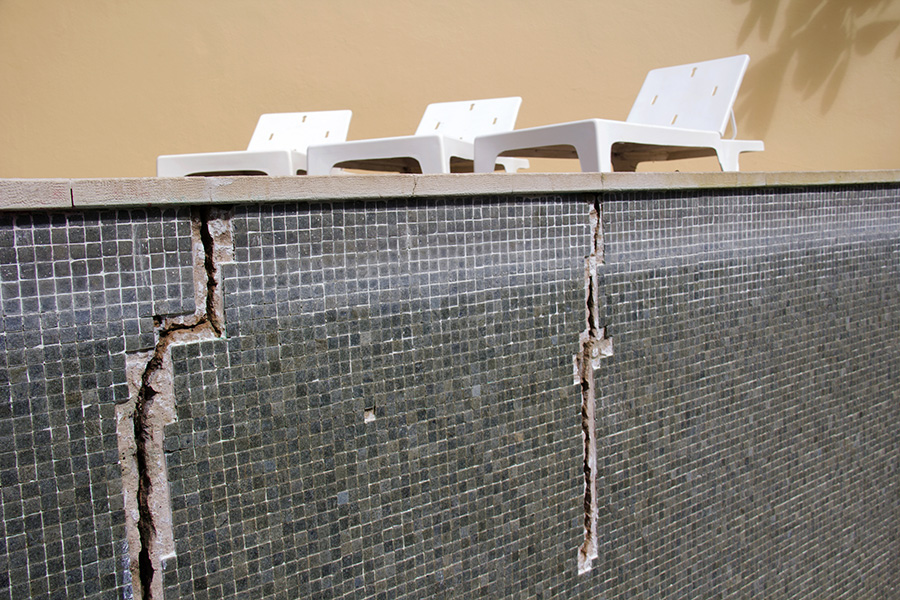
According to recent data from Arizona pool repair specialists, structural pool cracks cost homeowners between $10,000 and $40,000 to repair, with some repairs reaching even higher when foundation work is required. These staggering figures represent a harsh reality for pool owners who discover that inadequate rebar installation during construction has led to catastrophic structural failures years later.
The problem facing Arizona pool owners is particularly severe due to our unique desert conditions. Extreme temperature swings between scorching 115-degree summers and cool winters cause concrete to expand and contract dramatically. Combined with shifting soils, monsoon moisture, and the constant pressure of thousands of gallons of water, pools without proper steel reinforcement don’t just crack—they fail completely. This article reveals the true costs of pool structural damage and demonstrates how investing in quality rebar installation during construction provides insurance against financial disaster.
What Pool Cracks Really Are – Through Real Examples
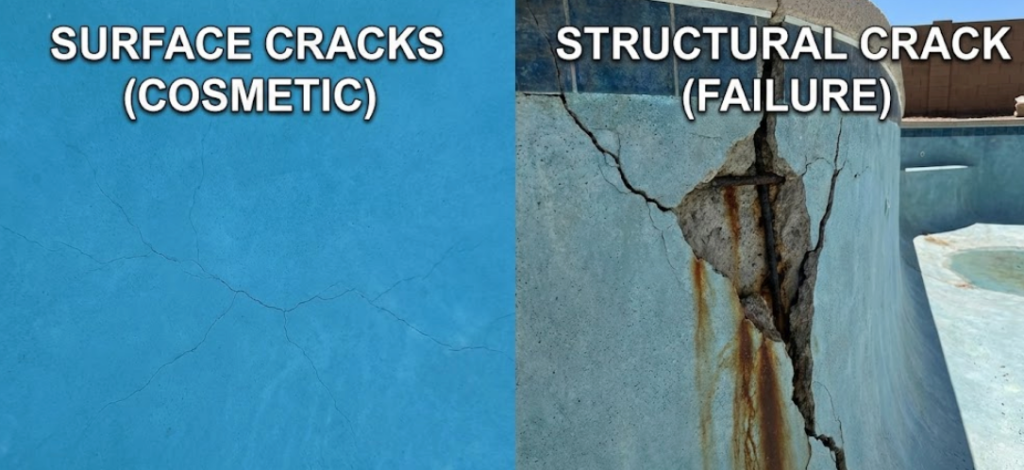
Understanding pool cracks requires examining actual failures in Arizona pools. H2O Pool Service, operating throughout the Valley since 2009, reports encountering two distinct types of damage in their repair work. Surface cracks, which they describe as running only across the plaster finish, present primarily cosmetic issues. However, structural cracks penetrate through the concrete shell itself, creating what the company warns could lead to “erosion of the soil surrounding your pool, which could lead to a collapse.”
All Valley Pool Repairs Inc., a Phoenix-based structural repair specialist, explains that structural cracks result from multiple factors specific to Arizona’s environment. Their technicians report that ground movement remains the primary culprit, particularly in areas with expansive clay soils that swell and contract with moisture changes. The company has documented cases where inadequate steel reinforcement allowed pools to crack under normal soil pressures that properly reinforced pools handle without issue.
Underwater Operations, Arizona’s specialized underwater repair company, provides unique insight into crack progression. They report that neglecting initial cracks “can cost you more money and more time when you do finally have the problem fixed.” Their experience performing underwater repairs reveals that rebar corrosion often underlies visible surface problems, with rust stains indicating deeper structural compromise that eventually manifests as major cracks.
How Phoenix Repair Companies Document Rising Costs
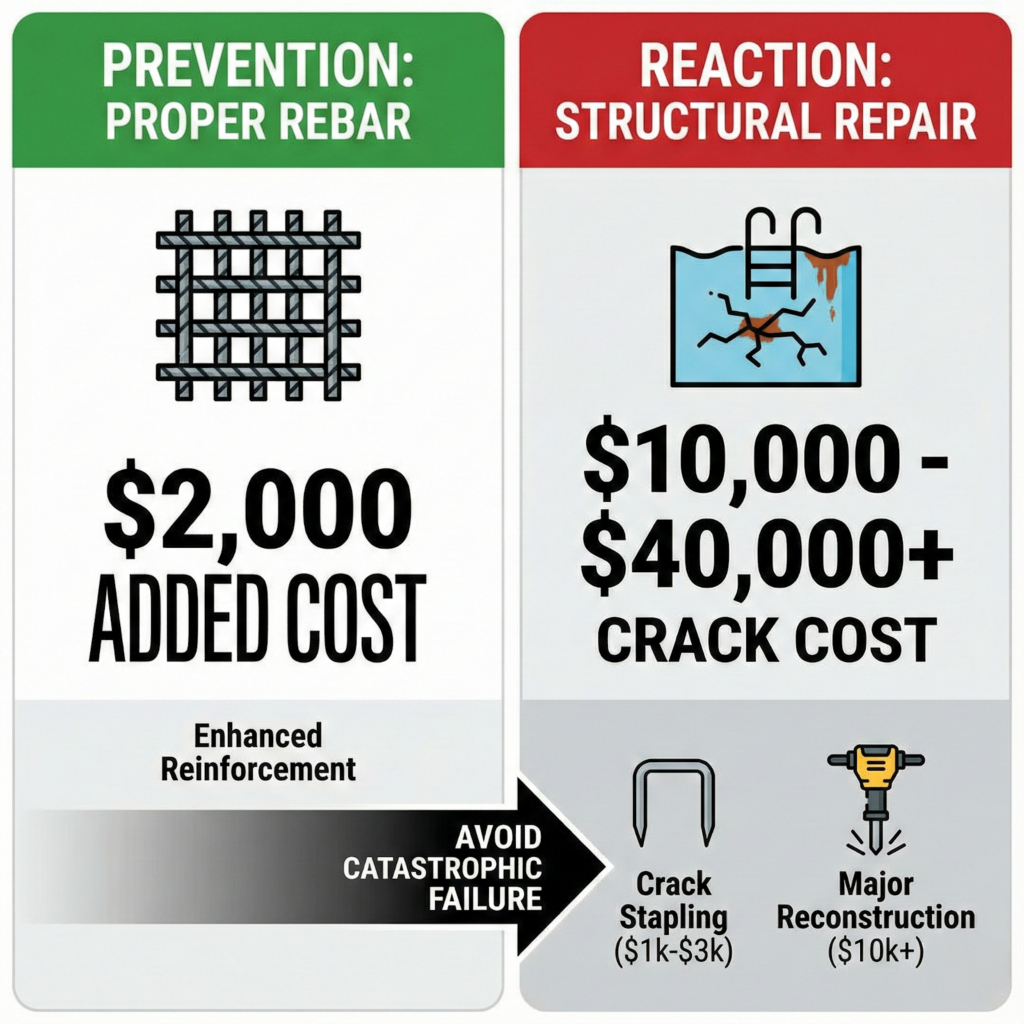
Pool repair specialists across Phoenix have published comprehensive pricing data revealing the escalating nature of structural repairs. Industry analysis from 2024-2025 shows that minor crack repairs requiring surface patching start at $500 to $2,000 when caught early. However, structural repairs involving crack stapling range from $1,000 to $3,000 for small sections. Complete structural reconstruction, which becomes necessary when cracks compromise shell integrity, frequently exceeds original pool construction costs.
Specific repair methodologies carry distinct price points based on complexity. Epoxy injection for small cracks costs $300-800 but provides only temporary solutions. Crack stapling, involving drilling and installing steel reinforcements across cracks, runs $150-300 per linear foot. Major structural repairs requiring section removal and reconstruction start at $10,000 for small areas and can reach $40,000 or more for extensive damage.
The American Restoration company’s documented case study using Rhino Carbon Fiber stitches demonstrates repair complexity. Their pool deck crack repair required creating templates, drilling precise holes, and installing carbon fiber stitches every 8-12 inches along cracks. This intensive process, while effective, illustrates why structural repairs become so expensive compared to proper initial construction.
Measurable Outcomes and ROI
Scholz Rebar’s approach to preventing these failures involves exceeding minimum steel requirements. According to their published specifications, they include “twice as much horizontal rebar as the competition’s standards,” a practice developed through nearly 40 years of Arizona pool construction experience. This additional reinforcement, while adding approximately 15-20% to initial rebar costs, provides measurable protection against structural failure.
Analysis of construction costs versus repair expenses reveals compelling economics. A typical residential pool rebar installation by Scholz costs between $1,900 and $2,500, based on owner-builder reports from 2022. Compare this to structural repair costs: crack stapling alone costs $1,000-3,000, structural reconstruction ranges $10,000-40,000, and complete pool replacement can exceed $100,000 when foundation damage occurs.
The return on investment becomes clear when examining failure rates. Pools built with minimal rebar often develop structural issues within 5-10 years, according to repair specialists. Properly reinforced pools, particularly those exceeding code minimums, typically last 25-30 years or more without structural problems. This longevity difference represents avoided repair costs of $20,000-40,000 over the pool’s lifetime, not including the inconvenience and property damage from catastrophic failures.
Comparing Industry Approaches
Different approaches to pool reinforcement directly impact long-term durability. Standard industry practice, driven primarily by cost competition, involves installing minimum code-required rebar. This typically means #3 or #4 bars spaced 12-18 inches apart, using Grade 40 steel. While meeting legal requirements, this minimal approach provides little margin for error in Arizona’s challenging conditions.
Scholz Rebar implements enhanced reinforcement strategies based on decades of local experience. Their published specifications indicate using Grade 60 steel, which provides 50% higher yield strength than Grade 40. They also reduce spacing between bars and double horizontal reinforcement near walls where stress concentrations are highest. This approach, while adding modest upfront costs, dramatically improves crack resistance.
The emergence of alternative materials provides another comparison point. FRP (Fiber Reinforced Polymer) rebar, as documented by composite material specialists in June 2025, costs 3-5 times more than steel initially but offers complete corrosion immunity. However, its brittleness and inability to be field-modified limit adoption. Most experienced contractors continue preferring enhanced steel specifications with proper coverage rather than switching to unproven materials.
Practical Implementation Guide
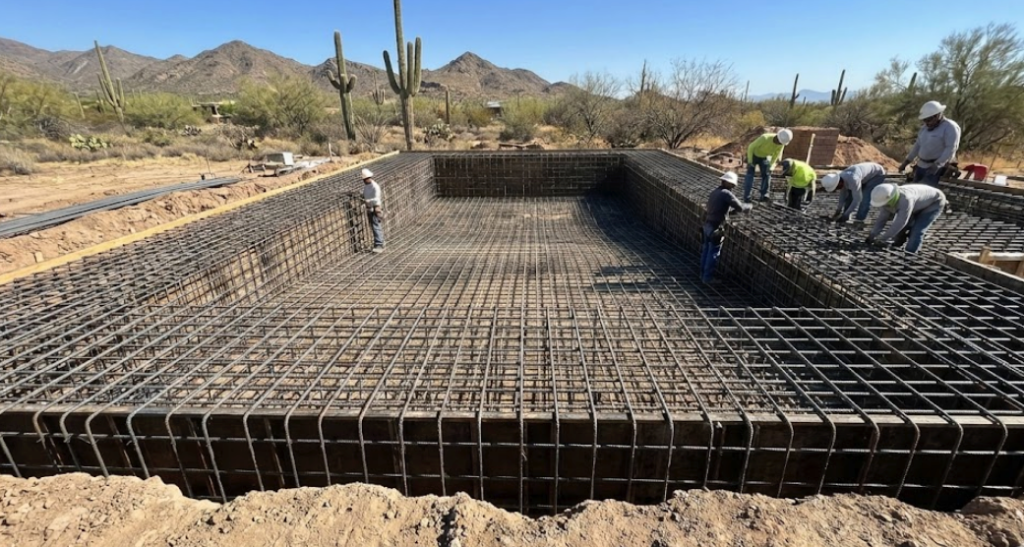
Based on documented methodologies from successful pool construction projects, proper rebar installation follows specific steps that Arizona contractors have refined over decades. The process begins with accurate interpretation of engineering drawings, which Scholz Rebar emphasizes requires experienced crews familiar with local soil conditions and building codes. Misreading specifications or improvising in the field frequently leads to the structural problems repair companies later encounter.
Successful installations maintain precise positioning throughout the steel placement process. Documentation from the American Concrete Institute specifies minimum concrete coverage of 3 inches for soil-contact applications. Arizona contractors often increase this to 3.5-4 inches given the alkaline soil conditions that accelerate corrosion. Maintaining this coverage requires rigid support systems that keep rebar from shifting during concrete placement.
Quality control during installation proves critical. Leading contractors implement internal inspection protocols before official inspections, catching positioning errors that could compromise structural integrity. This includes verifying lap splice lengths meet or exceed code requirements, confirming all intersections are securely tied, and ensuring no rebar contacts the soil directly. These details, while time-consuming, prevent the microscopic pathways for water intrusion that eventually cause catastrophic failures.
Conclusion
The documented experience of Arizona homeowners paying $1,900 for enhanced rebar installation rather than accepting minimum specifications demonstrates the minimal cost difference that provides substantial protection. When structural cracks develop years later, that small initial savings transforms into potential repair bills exceeding $20,000. The economics are clear: proper rebar installation during construction provides the highest return on investment of any pool component.
Arizona homeowners face a clear choice when building pools. They can accept minimum-standard reinforcement and risk joining the thousands facing expensive structural repairs, or invest marginally more in proper rebar installation that prevents these failures. The documented repair costs and real-world examples leave no doubt about the wise choice. Contact Scholz Rebar, with their 40-year track record of exceeding standards, to ensure your pool remains crack-free for decades rather than becoming another expensive repair statistic.
FAQ Section
Q: How can I tell if my pool crack is structural or just surface damage?
A: Structural cracks appear deep like fissures, often accompanied by water loss. Surface cracks are shallow, clustered, and show intact concrete underneath. Professional inspection provides definitive answers.
Q: What causes most pool cracks in Arizona?
A: Soil movement from expansive clay, extreme temperature changes, and hydrostatic pressure are primary causes. Inadequate rebar installation allows these forces to crack concrete.
Q: How much does proper rebar installation add to pool construction costs?
A: Enhanced rebar installation typically adds $500-800 versus minimum standards, representing 2-3% of total pool cost while preventing repairs costing $10,000-40,000.
Q: Can pool cracks be permanently repaired?
A: Crack stapling and section reconstruction can provide lasting repairs, costing $1,000-10,000. However, addressing underlying soil or reinforcement issues is essential for permanent solutions.
Q: When should I call a professional about pool cracks?
A: Immediately upon noticing cracks. Early intervention costs significantly less than waiting. Structural damage worsens over time, increasing repair complexity and cost.
This article references publicly available information from H2O Pool Service, All Valley Pool Repairs Inc., Underwater Operations, American Restoration company case studies, and industry repair specialists. Documentation includes published repair guides, pricing data, and technical specifications dated 2020-2025. All metrics and repair costs represent documented industry ranges. Results vary based on pool size, damage extent, soil conditions, and contractor selection. For current pricing and technical specifications, consult licensed contractors directly.